
New Water Supply in Chestfield
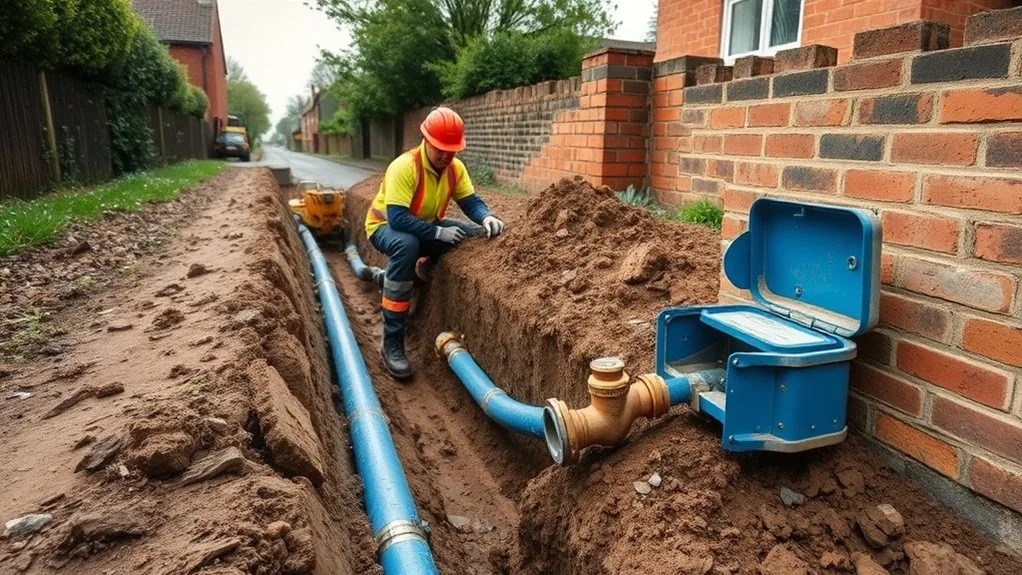
If you need a new water supply installation in Chestfield that meets all regulatory standards and connects your property to the mains, the process can involve detailed surveys, approvals, and testing.
Managing costs, timescales, and responsibilities at each stage is essential for a smooth installation.
Call now for a fast quote or emergency callout in Chestfield.
When you talk about a new water supply installation, you’re referring to the complete process of creating a compliant connection from the public water main (or an alternative potable source) to a building’s internal plumbing system, in line with local water authority requirements and relevant standards (such as the Water Supply (Water Fittings) Regulations or equivalent codes).
You’re dealing with survey, design, approval, excavation, pipe laying, disinfection, pressure testing, and final connection. You must protect water quality through correct pipe materials, separation from gas and drainage, suitable depth, backflow prevention, and certified fittings. You’ll submit plans, locate utilities, and coordinate inspections with the statutory undertaker. Installation costs reflect pipe route length, surface reinstatement, traffic management, and meter arrangements, plus any upgrade work needed on your existing internal plumbing.
Although it’s easy to overlook your incoming main until there’s a problem, you need a new water supply installation whenever a property requires a first-time connection to the public main, an existing supply is being replaced due to failure or contamination risk, or the demand and layout change so considerably that the current service and meter arrangement no longer meet regulatory or water authority standards. You’ll also need to upgrade when you’re changing pipe materials to comply with current byelaws, or improving Water conservation performance.
Typical triggers include:
You’ll move through a defined sequence: initial site survey and service design, a formal application for mains connection, regulated trenching and pipe laying, then testing and commissioning. At each stage you must comply with your water undertaker’s standards, national water regulations, and any local authority requirements, from pipe materials and depths to backflow protection. Understanding this process in order—survey and planning, application, installation work, and final pressure/disinfection tests—ensures your new supply is accepted and brought into service without enforcement issues or delays.
Before any trench is dug or pipe is laid, the new water supply installation process starts with a structured site survey and planning phase that verifies feasibility, compliance, and connection capacity at the mains. You’ll have your existing services mapped, boundary points confirmed, and any constraints—such as protected trees, utilities, or highways—identified.
Engineers then assess ground conditions, preferred pipe routes, and entry points into the building, ensuring separation distances from gas, electric, and drainage comply with Water Regulations. They’ll evaluate existing water pressure, demand profiles, and pipe sizing to avoid future flow or leak issues, using leak detection where necessary on legacy infrastructure. Finally, a method statement and risk assessment are produced, detailing excavation methods, pipe materials, backfill specifications, and reinstatement standards.
Once the survey and planning outputs are agreed, the next step is to submit a formal mains connection application to the relevant water undertaker, providing accurate drawings, load calculations, and evidence of land ownership or consent. You’ll also need proposed meter locations, peak and average demand data, and confirmation of intended use (domestic, commercial, or mixed).
The undertaker assesses network capacity, hydraulic impact, and Water Quality implications, ensuring no detriment to existing customers. You must declare any fire-fighting demand and process water requirements, plus backflow risks under the Water Supply (Water Fittings) Regulations.
They’ll issue a technical approval and connection offer detailing conditions, charges, and Supply Maintenance responsibilities, including metering, isolation, and future inspection access. Acceptance usually requires signed forms and upfront payment.
With the signed connection offer and payment in place, the focus moves from approvals to physically installing the new supply main and service pipes through properly designed trenching and pipe laying. You’ll need to follow water undertaker and Water Regulations requirements for depth, separation from other utilities, and protection from contamination.
Approved trenching techniques start with accurate marking of the route, controlled excavation, and suitable shoring where depths or ground conditions demand it. You must provide a level, compacted granular bed before any pipes are placed.
Select compliant pipe materials (typically MDPE to BS EN standards), correctly sized for your design flow and pressure. Lay pipes with continuous fall where specified, avoiding sharp bends, then install marker tape, backfill in layers, and compact to restore ground integrity.
Although the pipework’s in the ground, the supply can’t legally go live until it’s been tested, disinfected, and signed off in line with your water undertaker’s procedures and the Water Supply (Water Fittings) Regulations. You’ll first have the new main pressure-tested, typically to at least 1.5 times operating pressure, to confirm there are no leaks or joint failures.
Next, the main’s chlorinated, held for a specified contact period, then thoroughly flushed. Laboratory sampling verifies bacteriological and chemical water quality meets UK drinking water standards. Only once clear results are received will the undertaker authorise final connection and fit the meter.
You’re then briefed on isolation points, emergency shut‑off, and ongoing system maintenance to protect long-term compliance.
Why does choosing between a new water supply installation and traditional excavation matter so much to compliance and long‑term performance? You’re not just opening a trench; you’re controlling Water quality, Pipe materials selection, and how closely on-site works follow Water Supply (Water Fittings) Regulations and local Chestfield Authority Developer Services guidelines.
Modern installations favour moling or trenchless techniques, limiting disturbance while still allowing regulated depth, insulation, and contamination protection to be verified.
| Aspect | New Installation Focus | Traditional Excavation Focus |
|---|---|---|
| Survey & Design | Trenchless route, mains proximity, utilities map | Open-trench alignment, spoil handling |
| Pipe Materials | Barrier MDPE, WRAS-approved fittings | Mix of legacy and upgraded materials |
| Water Quality Protection | Sealed joints, dual containment options | Greater risk of ingress without strict checks |
| Regulatory Inspections | Targeted pits, photographic evidence | Continuous visual inspection |
| Reinstatement Procedure | Minimal surface repair | Full-depth backfill and compaction |
Selecting a new water supply installation over a purely traditional excavation approach doesn’t just change how the trench is formed; it changes the compliance profile, long‑term reliability, and evidencing of standards across the whole service line. You’re able to specify approved pipe materials, jointing systems, and isolation components that align with Water Regulations, local authority requirements, and your water undertaker’s by‑laws.
Whether you’re upgrading a single dwelling or a multi‑unit commercial site, new water supply installations follow the same regulatory backbone but diverge sharply in scale, loading, and evidencing requirements. In domestic properties, you’ll typically deal with a single metered connection, straightforward peak‑demand calculations, and point‑of‑use backflow protection, all documented to demonstrate compliance with Plumbing Regulations and local Water Regulations Guidance Notes.
For commercial premises, you must evidence higher design flows, diversity factors, and protection of Water Quality across complex distribution networks. You’ll need risk assessments for legionella, detailed schematics, and labelled isolation points, plus enhanced backflow prevention (RPZ valves, air gaps) where process water is involved. Both settings demand as‑built drawings, commissioning records, and certification for sign‑off.
From initial enquiry through to final sign‑off, our new water supply installation service across Chestfield is structured to meet Water Regulations and local authority requirements at every stage. You’ll have a survey that checks existing infrastructure, service routes, and boundary positions against utility records and consent conditions.
We then design the route, depth, and pipe material specification to comply with water undertaker standards, insulation requirements, and Water Fittings Regulations, with due regard for water conservation and leakage control.
| Stage | Compliance Focus |
|---|---|
| Survey | Asset location, risk assessment |
| Design | Pipe material, depth, backfill |
| Approvals | Section applications, permits |
| Installation | Trenching, hygiene, pressure testing |
| Connection | Chlorination, sampling, sign‑off |
Installation follows method statements, with documented pressure tests, disinfection, and certification for your records.
Because a new water connection is ultimately judged on compliance and performance, you need an installer that works to water undertaker standards as a baseline, not a ceiling. You’ll get designs, method statements, and as-built records aligned with Water Regulations, Building Regulations, and relevant British Standards.
We specify approved pipe materials, jointing systems, and fittings to minimise leakage risk and optimise long-term resilience. Our teams follow defined excavation, bedding, and backfill procedures, ensuring correct depths, separation from utilities, and contamination control.
You also benefit from a water conservation mindset: we size services to actual demand, minimise dead legs, and install isolating valves to simplify maintenance and reduce wastage. Every stage is documented, tested, and certified to satisfy utility and inspector requirements.
You’ll naturally want clear answers on how long a New Water Supply Installation takes under current water authority standards, whether it’s more cost‑effective than traditional trench excavation, and if your specific postcode in Chestfield is covered. In this FAQ section, you’ll see timeframes broken down by survey, permitting, and connection phases, so you can plan works in line with statutory notice periods and utility coordination. You’ll also get a direct comparison of installation versus digging costs, along with an explicit outline of our operational coverage across Chestfield.
Exactly how long a new water supply installation takes depends on the scope of works, statutory approvals, and coordination with the water undertaker, but most domestic connections typically range from a single day on site to several weeks overall including lead times. You’ll first allow time for surveys, utility searches, and design to satisfy Water Regulations, Water quality requirements, and pipe durability specifications.
Approval from the local water company can take 1–3 weeks, depending on completeness of your application and capacity checks on the network. On-site works, including trenching, pipe-laying, pressure testing, and chlorination, are usually completed within 1–2 days for straightforward domestic runs.
Final connection, commissioning, and meter installation are then booked with the undertaker, often adding 1–2 weeks to the overall programme.
Installation times naturally lead to the next question: how costs compare with simply digging up and repairing or replacing an existing line yourself. When you factor in regulatory requirements, a compliant New Water Supply Installation is often more cost‑effective over the asset’s life.
If you dig yourself, you’ll still need approvals, inspection points, and water authority sign‑off. Non‑compliant trench depth, bedding, or backfill can trigger re‑excavation at your expense. Professionally installed mains connections are designed for Pipe durability, correct material specification, and pressure ratings, which reduces leak risk and emergency callouts.
Modern installations also support Water conservation through properly sized pipes, sealed joints, and certified fittings, lowering losses. Over time, reduced maintenance, fewer leaks, and regulatory compliance usually outweigh the apparent saving of DIY digging.
Wondering whether your property in Chestfield falls within our service area for new water supply connections to the mains? You’re typically covered if you’re within the operational boundary of the relevant water undertaker for Chestfield, including most urban and rural postcodes. We define our service areas using postcode sectors, highway records, and existing mains layouts supplied by the statutory water company.
To confirm coverage, we’ll first check your postcode, then review utility records, asset maps, and any protected zones or highways constraints. Where coverage’s confirmed, we proceed under applicable local regulations, including permission for highway works, traffic management, and compliance with Water Supply (Water Fittings) Regulations. If you’re on the boundary of our area, we’ll advise on feasible connection routes or specialist referrals.
Yes, we can liaise with your local water authority on your behalf. You will authorise us as your representative, and we will prepare technical drawings and submit statutory applications. We will also respond to regulatory queries, coordinate inspection dates, verify asset records, and ensure all connections, meters, and isolation points meet the required standards and regulations.
Yes, we offer emergency new water supply installations in Chestfield. This is subject to an on-site assessment and approval from the local authority. Our engineers carry out a survey, ensure compliance with Water Regulations, and use suitable pipe materials before arranging excavation, chlorination, pressure testing, and connection.
Yes, installers can usually route new supplies to avoid trees, driveways, and existing landscaping features. They carry out surveys, mark utilities, and plan the trench path to minimise impact. Techniques such as hand-digging near roots, trenchless moling under driveways, and protective ducting are used, following WRAS, Water UK, and local authority guidelines.
Yes, finance or staged payment is usually available for new water supply connections. Payment plans typically include a deposit followed by instalments at key stages such as design approval, excavation, pipe-laying, and final connection. Some providers offer formal financing agreements that comply with consumer credit and Ofwat regulations.
Yes, we provide assistance with locating and mapping existing underground utilities before installation. This includes detailed utility mapping using CAT & Genny, GPR, and underground inspection pits. We also cross-check records, mark service routes, update site plans, and coordinate clearances and permits to ensure compliant and damage-free excavation.
Before any excavation or pipework begins, you’ll need a precise, regulation-compliant quotation that details the full scope of your new water supply installation—covering survey requirements, pipe material and diameter, connection point to the water main, boundary box or meter arrangements, and any traffic management or reinstatement obligations. Your quote should also show how Water conservation measures and current Plumbing regulations (WRAS, Water Fittings Regulations, and local water undertaker standards) will be met.
To get an accurate quote, you’ll provide site plans, usage estimates, and preferred entry point. We’ll then undertake a technical assessment, liaise with the water company, and price all statutory applications, disinfection, pressure testing, chlorination, and certification. You’ll receive a phased, itemised cost breakdown with programme durations.